
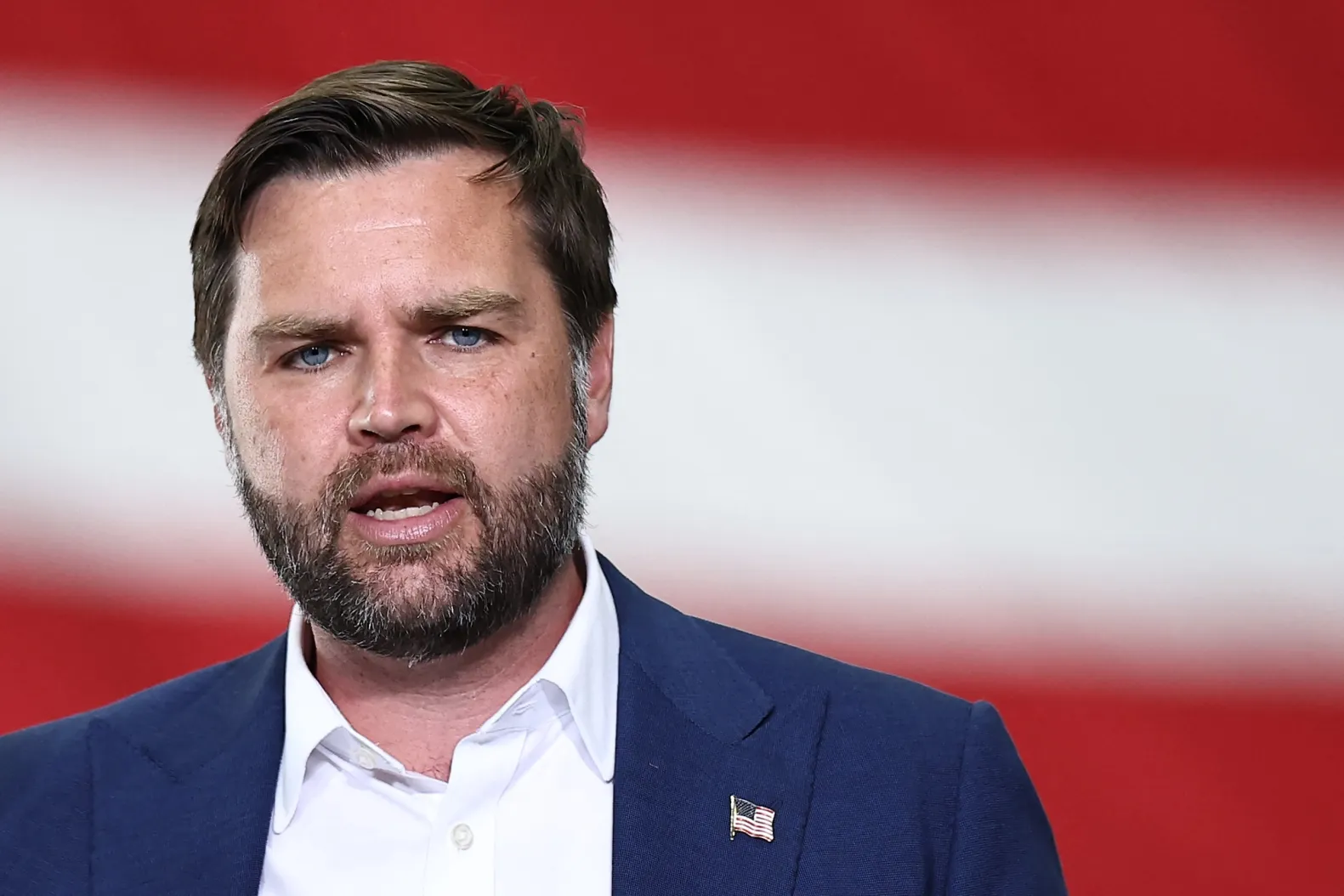
James David Vance, known simply as JD Vance, has become one of the most talked-about political figures in America. At just 40 years old, he serves as the 50th Vice President of the United States, working alongside President Donald Trump. His remarkable journey from a struggling childhood in Ohio’s Rust Belt to the second-highest office in the nation has captivated millions of Americans.
In this comprehensive biography, we’ll explore everything you need to know about JD Vance—his early life, military service, education at Yale Law School, bestselling memoir, venture capital career, political rise, family life, and impressive net worth.
JD Vance Age and Birth Information
JD Vance was born on August 2, 1984, making him 40 years old in 2025. He was born as James Donald Bowman in Middletown, Ohio, a once-thriving manufacturing town about 30 miles northeast of Cincinnati. His birthplace would later become central to his identity and the story he would tell in his famous memoir.
Born under the zodiac sign Leo, Vance embodies many characteristics associated with the sign—determination, leadership, and natural charisma. His birthday places him firmly in the Millennial generation, making him one of the youngest vice presidents in American history. In fact, he’s the third-youngest person to ever hold this office, following John Breckinridge (who served under James Buchanan) and Richard Nixon (who served under Dwight D. Eisenhower).
JD Vance Height and Physical Appearance
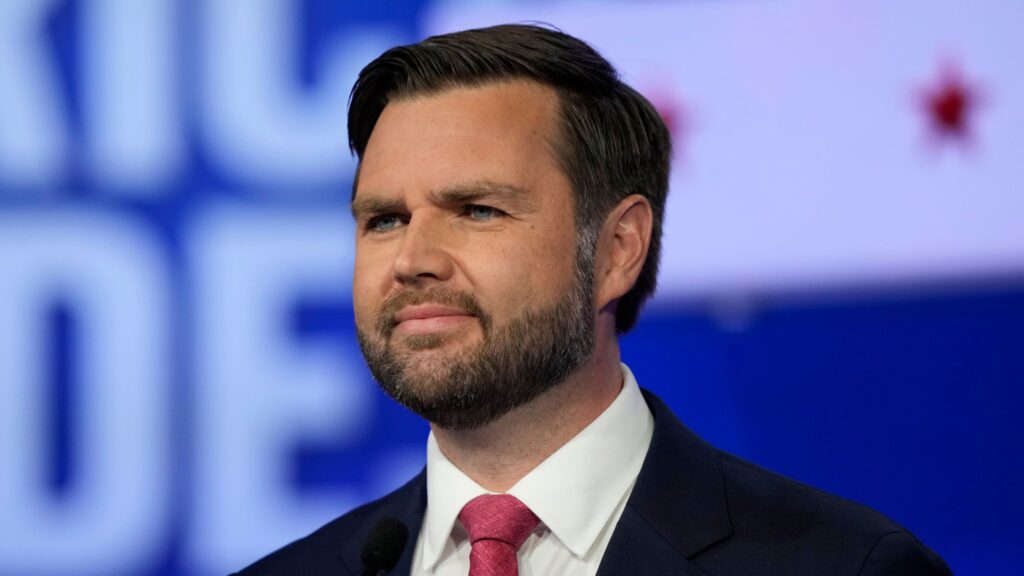
When it comes to physical stature, sources report varying measurements for JD Vance’s height. Most reliable estimates place him between 5 feet 10 inches and 6 feet 1 inch tall (approximately 178-185 cm). The most commonly cited measurement is around 5’10” to 6’0″, which makes him slightly shorter than some taller political figures like Donald Trump (6’3″) but taller than the average American male.
His weight is estimated at approximately 165-170 pounds (75-77 kg), giving him an athletic, well-proportioned build. This physique reflects his background as a United States Marine Corps veteran, and he maintains a professional, fit appearance suitable for the demanding schedule of public office.
Vance typically presents himself in business attire, projecting a clean-cut, professional image. He has brown hair, which he keeps neatly styled, and blue eyes. His overall appearance conveys the image of someone who bridges both working-class authenticity and professional polish—a visual representation of his life journey.
Early Life and Family Background
A Childhood Marked by Struggle
JD Vance’s early life was anything but easy. Born to Donald Bowman and Beverly Vance (known as Bev), his childhood was marked by family instability, poverty, and addiction. He has an older half-sister named Lindsay Lewis Ratliff, whom Bev gave birth to shortly after graduating high school at age 19.
When JD was very young, his parents divorced. His biological father, Donald Bowman, essentially disappeared from his life, and JD would later write that his father “gave me up for adoption when I was 6.” His mother remarried a man named Bob Hamel, who adopted young James, and his name was legally changed to James David Hamel. The middle name was changed from Donald to David—after a great-uncle—to erase the connection to his absent father.
The Grandmother Who Saved Him
The most significant figures in JD Vance’s life were his maternal grandparents, Bonnie and James Vance, whom he affectionately called “Mamaw” and “Papaw.” When his mother’s addiction to prescription medications and heroin spiraled out of control, these grandparents became his primary caregivers.
In his memoir, Vance recounts a terrifying incident when he was 12 years old. His mother, in an erratic state, threatened to crash her speeding car and kill them both. Police arrested Beverly after this encounter, and JD went to live permanently with his grandparents in Middletown.
Mamaw, his grandmother, became his rock. She was a tough, no-nonsense woman who famously owned 19 handguns and provided the discipline and love that JD needed to stay on track. She pushed him academically, encouraged his dreams, and gave him stability in an otherwise chaotic world. Vance would later credit her as the person who saved his life.
The Vance family had roots in Appalachia, specifically Breathitt County, Kentucky, in the town of Jackson. They had migrated to Ohio after World War II, seeking better economic opportunities in the manufacturing sector. This Appalachian heritage—with its Scots-Irish cultural values—would become central to Vance’s identity and his understanding of working-class America.
Mother’s Recovery
In a heartwarming turn of events, Beverly Vance has now been sober for over 10 years. She attended JD’s speech at the 2024 Republican National Convention, marking a powerful moment of reconciliation and redemption. Her journey from addiction to recovery mirrors many of the themes Vance writes about in his work—the possibility of change and the importance of family support.
Education: From Middletown High to Yale Law School
High School and Military Service
JD Vance graduated from Middletown High School in 2003. By his own admission, he wasn’t quite ready for adulthood and didn’t have clear direction for his future. Like many young people from his community, he faced limited options and an uncertain path forward.
Instead of going directly to college, Vance made a decision that would transform his life: he enlisted in the United States Marine Corps. From 2003 to 2007, he served his country with distinction. He worked as a military journalist in public affairs, and in 2005, he was deployed to Iraq during the Iraq War. This experience taught him discipline, broadened his worldview, and gave him confidence that he could succeed.
Ohio State University
After completing his military service, Vance used the GI Bill to attend college. He enrolled at The Ohio State University, where he excelled academically. He graduated with a bachelor’s degree in Political Science and Philosophy, demonstrating his growing interest in understanding society, governance, and human nature.
His time at Ohio State was transformative. Coming from a working-class background and military service, he found himself surrounded by traditional college students. But he thrived, proving to himself that he could compete academically with anyone.
Yale Law School: A Culture Shock
In 2010, Vance was accepted to Yale Law School, one of the most prestigious law schools in the world. He would graduate with his Juris Doctor (J.D.) degree in 2013. At Yale, he experienced what he later described as “culture shock.” The elite institution was filled with students from privileged backgrounds, and Vance often felt like an outsider.
In his memoir, he wrote about feeling like an “awestruck tourist” on campus. Simple things like formal dinners and networking events were completely foreign to him. He didn’t understand the unspoken rules of upper-class society, from which fork to use at dinner to how to conduct himself at networking receptions.
However, Yale also provided him with invaluable connections and opportunities. It was here that he met his future wife, Usha Chilukuri, who would become his partner in life. He also connected with influential figures who would shape his career, including law professor Amy Chua, who encouraged him to write his memoir and served as what he calls the “authorial godmother” of Hillbilly Elegy.
Perhaps most significantly, he met billionaire entrepreneur Peter Thiel during a visit to Yale. Thiel, co-founder of PayPal and Palantir, saw potential in Vance and encouraged him to pursue entrepreneurship rather than a traditional legal career. This connection would prove pivotal to Vance’s future in venture capital.
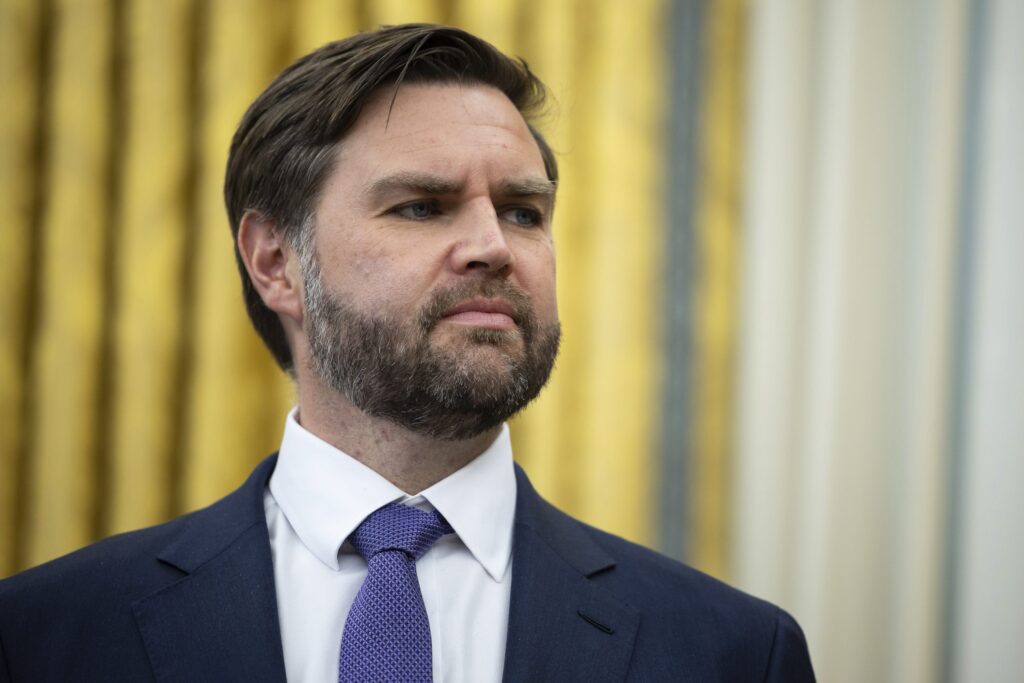
Career Journey: From Law to Business to Politics
Corporate Law
After graduating from Yale Law School in 2013, Vance took his first professional job as a corporate attorney. He worked as a litigation associate at Sidley Austin, a major American law firm with offices in over 70 countries. He clerked for a year in Cincinnati before moving to the firm’s Washington, D.C. office.
However, the traditional legal career path didn’t satisfy him for long. The connection with Peter Thiel had planted seeds of entrepreneurial ambition.
Venture Capital Career
Vance transitioned into the world of venture capital, where he would build significant wealth and influence. He started as a principal at Mithril Capital Management, a venture capital firm founded by Peter Thiel and Ajay Royan. At Mithril, he focused on investing in technology startups, particularly those outside of Silicon Valley.
In 2017, Vance joined Revolution, a venture capital firm founded by former AOL CEO Steve Case. As a managing partner, he led investments in several technology and industrial companies, with a particular focus on businesses in the Midwest—the heartland of America that he understood so well.
In 2019, Vance co-founded his own venture capital firm, Narya Capital, named after a magical ring in J.R.R. Tolkien’s “Lord of the Rings” (Vance is a known Tolkien fan). Based in Cincinnati, Narya focused on investments in American manufacturing, defense technology, and industrial innovation. The firm aligned with Vance’s political philosophy of economic nationalism and revitalizing American industry.
Through his venture capital work, Vance invested in companies related to defense technology, advanced manufacturing, and America-centric innovation. These investments not only grew his personal wealth but also gave him deep insight into the challenges facing American businesses and workers.
Author and Public Intellectual
The defining moment of JD Vance’s public career came in 2016 with the publication of his memoir, “Hillbilly Elegy: A Memoir of a Family and Culture in Crisis.” The book became an instant sensation.
Published just as Donald Trump was winning the 2016 presidential election, the memoir struck a chord with Americans trying to understand the political and cultural divisions in the country. The book provided an intimate look at white working-class life in Appalachia and the Rust Belt, exploring themes of poverty, addiction, family dysfunction, and cultural values.
Vance’s central thesis examined how Appalachian culture—with its emphasis on family loyalty and suspicion of outsiders—could both sustain and limit people. He raised uncomfortable questions about personal responsibility versus systemic failures, arguing that his community faced both external economic challenges and internal cultural problems.
The book became a New York Times bestseller, spending weeks at the top of the list and eventually selling over 2 million copies by 2024. It resonated particularly with coastal elites trying to understand Trump voters and with working-class Americans who saw their own struggles reflected in Vance’s story.
Critics offered mixed reviews. Some praised it as a compassionate sociological analysis, while others criticized it for blaming the poor for their circumstances and ignoring systemic issues like racism and economic policy failures. Scholars and Appalachian community members published response anthologies, debating Vance’s characterization of the region.
In 2020, Netflix adapted the book into a film directed by Ron Howard, starring Glenn Close as Mamaw and Amy Adams as Bev. While the film received mixed reviews, it brought Vance’s story to an even wider audience.
The book’s success brought Vance substantial wealth. By 2025, “Hillbilly Elegy” had generated between $400,000 and $500,000 in royalties, with annual income from the book ranging from $15,000 to $121,000 depending on the year. He reportedly received a significant portion of the $45 million that Netflix paid for film rights.
Entry Into Politics
For years after his book’s success, Vance worked as a public intellectual, appearing on major news networks as a political commentator and speaking at conferences and universities. He offered analysis on working-class politics, economic policy, and cultural issues.
However, Vance’s political journey took an interesting turn. In 2016, during Trump’s first campaign, Vance was openly critical of the future president. He called Trump “reprehensible” and said he was “a never-Trump guy.” He expressed concerns about Trump’s character and worried about what his presidency would mean for conservatism and the country.
But by 2021, Vance’s position had evolved. He later explained that he had been wrong about Trump and had come to see him as the leader the country needed. Critics called this political opportunism; supporters saw it as honest reevaluation.
U.S. Senate Campaign and Victory
On July 1, 2021, JD Vance officially announced his campaign for the United States Senate seat in Ohio. The race was crowded, with multiple prominent Republicans vying for the nomination, including former Ohio State Treasurer Josh Mandel and State Senator Matt Dolan.
Vance secured Donald Trump’s crucial endorsement, which proved decisive in the Republican primary. On May 3, 2022, Vance won the Republican primary with 32% of the vote, defeating Mandel (23%) and Dolan (22%).
In the general election on November 8, 2022, Vance defeated Democratic nominee Tim Ryan with 53% of the vote to Ryan’s 47%. Some political analysts noted this margin was narrower than other Ohio Republicans’ victories that year, suggesting Vance underperformed compared to expectations in such a solidly Republican state.
On January 3, 2023, Vance was sworn into the United States Senate as a member of the 118th Congress. He served as Ohio’s junior senator until January 3, 2025, when he resigned to assume the vice presidency.
Senate Record
During his brief Senate tenure from January 2023 to January 2025, Vance established himself as a strong voice for conservative populism. Data from mid-2024 showed he had made 45 Senate speeches and sponsored 57 legislative bills, though none had passed the Senate.
His Senate work focused on several key issues:
- Securing America’s southern border
- Revitalizing American manufacturing
- Fighting for working-class families
- Limiting Big Tech power
- Promoting economic nationalism
- Opposing military interventionism abroad
Vance became known for his skepticism of foreign military engagements, particularly regarding continued U.S. support for Ukraine. He advocated for prioritizing domestic issues over international conflicts.
Vice Presidential Nomination and Election
In July 2024, at the Republican National Convention, Donald Trump selected JD Vance as his running mate for the 2024 presidential election. At 40 years old, Vance brought youth, energy, and appeal to working-class voters in crucial swing states.
The Trump-Vance ticket campaigned on themes of economic nationalism, border security, and America First policies. On November 5, 2024, they won the presidential election.
On January 20, 2025, JD Vance was sworn in as the 50th Vice President of the United States by Supreme Court Justice Brett Kavanaugh (the same judge his wife Usha had clerked for years earlier). Standing beside him were his wife Usha and their three children.
At age 40, Vance became one of the youngest vice presidents in American history, representing a generational shift in Republican politics.
JD Vance Family and Personal Life
Marriage to Usha Vance
In 2013, while both were students at Yale Law School, JD Vance met Usha Chilukuri. She is the daughter of Indian immigrants and was raised in the Hindu faith in San Diego, California. Like Vance, she was exceptionally accomplished—a brilliant law student with a bright future.
The couple married on June 14, 2014, in Kentucky in a beautiful interfaith ceremony. The wedding included both Christian and Hindu elements: Vance’s best friend, Jamil Jivani, gave a Bible reading, and a Hindu pandit blessed the couple according to Hindu traditions. This blending of faiths reflected their commitment to honoring both of their backgrounds.
Usha Vance (née Chilukuri) is a highly accomplished attorney in her own right. After graduating from Yale Law School, she clerked for:
- Brett Kavanaugh (when he was an appeals court judge)
- Chief Justice John Roberts (at the U.S. Supreme Court)
After her clerkships, she worked as an attorney at Munger, Tolles & Olson, a prestigious San Francisco law firm specializing in higher education, local government, entertainment, and technology law. The median pay at the firm is approximately $239,000.
In 2024, shortly after JD became the vice presidential nominee, Usha resigned from her position at the law firm to focus on supporting her husband’s political career and caring for their family.
Children
JD and Usha Vance have three children:
- Ewan Vance (son)
- Vivek Vance (son)
- Mirabel Vance (daughter, also spelled Maribel)
The Vance family strives to maintain privacy for their children, keeping them largely out of the spotlight despite their father’s prominent political role. They balance public duties with private family time, raising their children with strong values drawn from both of their cultural and religious backgrounds.
Extended Family
JD Vance maintains connections to his extended family, though relationships have been complicated. His half-brother, Cory Bowman, ran unsuccessfully in the 2025 Cincinnati mayoral election.
Interestingly, his cousin Nate Vance, a U.S. Marine Corps veteran, volunteered to fight for Ukraine in 2022 after Russia’s invasion. Nate served with the “Da Vinci Wolves” unit and fought in major battles at Kupiansk and Bakhmut. In 2025, he publicly criticized JD and Trump’s stance on Ukraine, accusing them of aiding Russia—highlighting that even families can have deep political divisions.
Real Estate and Residences
The Vance family owns substantial real estate:
- Cincinnati Home: Purchased in 2018 for $1.4 million in the East Walnut Hills neighborhood. The 157-year-old home is now valued at approximately $1.8 million.
- Washington, D.C. Property: Purchased in August 2014 for $590,000. Currently valued at about $850,000, this property is rented out, generating between $15,000 and $50,000 in annual rental income.
- Alexandria, Virginia Home: Purchased in 2022 for $1.6 million after Vance won his Senate seat. This 2,500-square-foot home is now worth approximately $1.8 million.
- Kentucky Land: The family owns over 100 acres of land in Kentucky, maintaining a connection to their Appalachian roots.
The family primarily lives in the Cincinnati area but maintains residences near Washington, D.C., for political duties.
Faith and Religion
JD Vance was raised in what he describes as a “conservative, evangelical” Protestant tradition. However, when entering college, he identified as an atheist—a common response to the difficulties and uncertainties of his childhood.
His faith journey has evolved over time. He is now a practicing Christian, though his wife Usha remains Hindu. Their interfaith marriage represents their mutual respect for each other’s spiritual traditions, and they are raising their children with exposure to both faiths.
JD Vance Net Worth 2026
Estimated Net Worth
As of 2026, JD Vance net worth is estimated to be between $9 million and $12 million, according to various financial reports and disclosures from Forbes, financial news outlets, and federal disclosure forms.
His wealth represents a remarkable transformation from his working-class upbringing. As Forbes noted, “Given where he started, it’s a remarkable sum, one that solidifies Vance’s place in circles that might have made his younger self uncomfortable.”
While impressive, his net worth is far below that of President Donald Trump (estimated at $6.7 billion) and many cabinet appointees. However, it far exceeds the median American household net worth of approximately $193,000.
Sources of Wealth
1. Book Royalties
“Hillbilly Elegy” has been JD Vance’s most visible source of income. The memoir has sold over 2 million copies and continues to generate royalties:
- Total royalties by 2025: Approximately $400,000-$500,000
- Annual royalty income: Between $15,000 and $121,000 depending on the year
- Netflix film deal: Portion of the $45 million Netflix paid for film rights
2. Venture Capital Career
Vance’s most substantial wealth came from his venture capital work:
- Positions at Mithril Capital (Peter Thiel’s firm)
- Managing partner at Revolution (Steve Case’s firm)
- Co-founder of Narya Capital
His investments focused on technology startups, defense companies, and American manufacturing. He still holds assets from venture capital funds he ran before becoming a senator.
3. Investment Portfolio
Federal disclosures reveal substantial investment holdings:
- Charles Schwab brokerage account: Valued between $2.3 million and $7.7 million
- Bitcoin holdings: Between $250,000 and $500,000
- Various retirement funds and savings accounts
4. Real Estate Holdings
His real estate portfolio is valued at approximately $4 million:
- Cincinnati home: $1.8 million value
- Alexandria, Virginia home: $1.8 million value
- Washington, D.C. rental property: $850,000 value (generates $15,000-$50,000 annual rental income)
- Kentucky land: Over 100 acres (value not publicly disclosed)
5. Government Salary
- As U.S. Senator (2023-2025): $174,000 annually
- As Vice President (2025-present): $235,100 annually
Liabilities
Vance maintains relatively minimal debt:
- 30-year mortgage: Between $250,000 and $500,000 at 3.85% interest rate
- Line of credit: Between $500,000 and $1 million
- Estimated remaining mortgage on D.C. property: $480,000
Financial Transparency
Vance’s financial disclosure forms filed with the U.S. Office of Government Ethics provide the most accurate picture of his wealth. The forms show total assets between $4.8 million and $11.3 million as of August 2024, with the wide range due to how government forms report value ranges rather than exact figures.
Political Views and Philosophy
JD Vance identifies as a conservative populist aligned with the America First movement. His political philosophy draws from several sources:
Economic Populism: Vance advocates for policies that benefit working-class Americans, including:
- Revitalizing American manufacturing
- Opposing free trade deals that harm American workers
- Supporting tariffs to protect domestic industries
- Fighting corporate consolidation and monopolies
Cultural Conservatism: He holds traditional conservative positions on:
- Faith and religion’s role in public life
- Family values and structure
- Skepticism of progressive social movements
- Opposition to what he calls “woke” ideology
Technology Skepticism: Vance is critical of Big Tech companies, advocating for:
- Antitrust action against tech monopolies
- Protecting user data and privacy
- Limiting tech companies’ influence over public discourse
- Keeping TikTok out of Chinese government control
Foreign Policy: He takes a non-interventionist approach:
- Skeptical of military interventions abroad
- Critical of U.S. support for Ukraine in its war with Russia
- Focus on China as America’s primary adversary
- Prioritizing domestic issues over international conflicts
Immigration: Vance supports strict immigration enforcement:
- Securing the southern border
- Limiting legal immigration levels
- Enforcing laws against illegal immigration
- Prioritizing American workers
Controversies and Criticism
Like any prominent political figure, JD Vance has faced controversies:
1. Trump Flip-Flop: Critics point to his transformation from calling Trump “reprehensible” in 2016 to becoming his running mate in 2024, calling it opportunistic.
2. “Childless Cat Ladies” Comment: Vance faced backlash for past comments about Democratic politicians without biological children, which many saw as offensive to women who are childless by choice or circumstance.
3. Hillbilly Elegy Criticism: His memoir drew criticism for allegedly blaming poor people for their poverty while downplaying systemic issues and racism.
4. Ukraine Stance: His skepticism about supporting Ukraine has drawn criticism from those who see Russian aggression as a threat to democracy.
5. Working-Class Authenticity: Some critics argue that his Yale Law degree, venture capital wealth, and elite connections undermine his claims to speak for working-class Americans.
Legacy and Future
At just 40 years old, JD Vance stands at the beginning of what could be a long political career. As Vice President, he’s positioned as a potential heir to Trump’s political movement and a leading candidate for the presidency in 2028 or beyond.
His journey from poverty to power embodies both the American Dream and contemporary debates about class, culture, and opportunity in America. Whether you agree with his politics or not, his story—from a struggling childhood in Middletown to the Vice Presidency—is undeniably compelling.
Vance represents a new generation of Republican leadership: young, media-savvy, intellectually credentiered, and committed to populist conservatism. His influence on American politics will likely extend well beyond his current role.
Conclusion
JD Vance biography reads like a uniquely American story. From a childhood marked by poverty, addiction, and family instability to the Marine Corps, Yale Law School, bestselling author status, venture capital success, and ultimately the Vice Presidency—his journey reflects both incredible personal resilience and the opportunities available in American society.
At 40 years old, standing between 5’10” and 6’0″ tall, with an estimated net worth of $9-12 million, married to accomplished attorney Usha Vance, and raising three children, JD Vance has traveled far from his roots in Middletown, Ohio. Yet he maintains that those roots—and the lessons learned from his grandmother Mamaw and his Appalachian heritage—continue to shape his worldview and political philosophy.