

QuikConsole.com is best approached as a multi-topic article website, not as a verified software product. If you found it through search results, the product-sounding name may create confusion about what visitors can actually do there.
This review helps you decide whether you need an informational resource or a functioning digital tool. Those are different needs: articles can help you explore technology ideas, while software must provide working features you can use.
The distinction matters before you sign in, pay, or plan work around a supposed service. A website’s visible pages offer a more useful test than a promising name, especially when search descriptions disagree. This assessment focuses on what readers can access and what the site demonstrates. Reading value and product value are separate questions, and neither should be assumed from branding alone. Readers should judge it by the pages and functions they can actually access, not by the word “console.”
What Is QuikConsole Com?
QuikConsole.com is a WordPress-based publication that gives visitors articles to read. Its main role is publishing information, rather than giving users an interactive software platform to operate.
A content-publishing site is a website whose main function is publishing articles for visitors to read. Visitors browse article pages and categories; using software means carrying out tasks through working controls, tools, or an account.
A domain name alone cannot establish whether a site is a publisher or a software platform.
In 2026, QuikConsole.com is described as a WordPress content-publishing website covering technology, AI, business and finance, education, health and lifestyle, travel, law, and home improvement. The pages visitors can read establish a publishing function, not an interactive service.

The distinction matters when you compare the site with search descriptions that call it a product. A publication can discuss tools without providing those tools. The domain’s name may sound like a console, but that word does not show what functions are available. You can see the difference in this review of QuikConsole’s visible site, which compares its article pages with product-like descriptions.
Check a specific page for its actual purpose before relying on a label, headline, or short description. A product claim needs evidence about how a feature works, not just a reference to it in an article. Treat its publishing role as the starting point for evaluating any specific page or claim.
What Topics and Articles Can Readers Find?
The navigation ranges from Technology and Finance to Travel, Law, and Home Improvement. It combines general-interest subjects with technical content, giving readers several kinds of articles to browse. The range is broad, rather than focused on one specialist field.
The navigation has 12 content links, with Digital Marketing nested under Technology. It also includes Business, Education, Health, Lifestyle, Pets, and Real Estate. There is no gaming category in the navigation. That matters when you are trying to decide whether the site is an article resource or a dedicated gaming service.
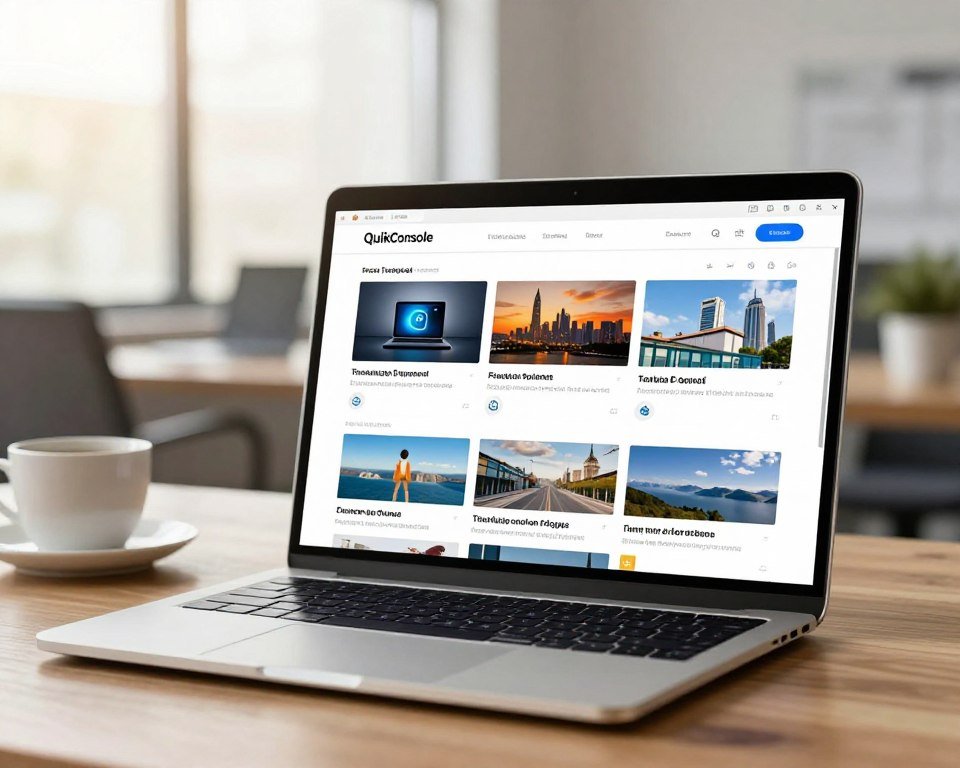
AI coverage includes model drift detection, Gemini updates, coding tools, and AI-sector stocks. Those subjects can help you discover terms or follow broad technology news, but they do not make the publisher an AI tool. A page about a product is not the product itself.
Readers should judge an article by the explanation, evidence, and usefulness on that page. A short overview may be a starting point, while a technical claim needs enough detail to test or confirm. Look for clear definitions, relevant examples, and references that support the article’s key points.
Broad coverage can be convenient for casual browsing, but it does not guarantee equal depth across every subject. The same reader may find an introductory overview useful and still need specialist guidance for a complex decision. For a consequential claim, compare the article’s explanation with an authoritative source in that subject.
Does QuikConsole Com Offer Actual Software Features?
QuikConsole.com does not present a verifiable dashboard or software tool for visitors to operate. The visible experience is article publishing, not a demonstrated software platform. That difference is important when a description promises product features.
The site has no product page, documented dashboard, API, or downloadable software. Its homepage text tells new users to create an account, yet visitors do not see a login or signup link. An account instruction without a working account flow does not demonstrate an account-based service.
| Signal | QuikConsole.com | What a working product would show |
|---|---|---|
| Product page | No product page | Feature descriptions and product details |
| Dashboard | No documented dashboard | Accessible controls or a demonstration |
| API | No documented API | API documentation and usage examples |
| Downloadable software | No download offered | A software download and system details |
| Account flow | Account instruction, no login or signup link | Working signup and login pages |
The table separates evidence a visitor can inspect from features expected in an operating product. A platform might provide a demo instead of public access, but it would still need clear documentation explaining what the product does and how to reach it.
The homepage instruction could leave a visitor expecting an account setup that the site does not provide. Do not treat instructions to create an account as proof that an account-based service exists.
Why Do Search Results Give Conflicting Descriptions?
Search results conflict because they assign the same name to several incompatible kinds of product. Online descriptions call QuikConsole an AI developer console, gaming-management dashboard, cloud tool, and productivity platform. Those labels are claims, not proof of working features.
Two third-party pages use the identical headline, “QuikConsole Com Review: Features and Complete Guide (2026),” while describing incompatible products. Repetition can make separate descriptions look confirmed, even when they do not point to the same functioning service.
| Claim area | Description found online | Evidence on the exact domain | How to interpret it |
|---|---|---|---|
| AI developer console | AI coding or developer console | Unverified; no working console shown | Product claim, not established |
| Gaming dashboard | Gaming management dashboard | Unverified; no dashboard shown | Product claim, not established |
| Cloud tool | Cloud service or management tool | Unverified; no cloud controls shown | Product claim, not established |
| Productivity platform | Productivity and workflow platform | Unverified; no workflow shown | Product claim, not established |
Identical headlines and repeated descriptions do not independently prove a feature. Several pages can repeat one unsupported description without showing a working product, firsthand testing, or matching documentation.
Compare the description with the exact domain, not just the name in a result snippet. A detailed-sounding feature list still leaves a basic question: can you see and use the feature, or find instructions that explain how it works?
Search wording can be useful for discovering a claim, but it cannot substitute for product evidence. Regard a feature as established only when the exact domain demonstrates it or documents how it works.
How Easy Is the Site to Browse?
A reader can evaluate the browsing experience by following a topic from the homepage to an article and back. The site presents a conventional path through navigation, article pages, and internal links. That path is simple to test without an account.
Start with a page title that matches your question, then check whether the article stays on that subject. Follow an internal link only when its label describes the destination. Useful navigation depends on accurate page titles and links, not visual polish alone.
The featured images add a visual layer, but filenames include “ChatGPT-Image,” and the images are served from a third-party CDN. Those details say something about image handling, not whether an article answers your question well.
Check the route back to the homepage or a relevant category when you finish reading. A clear path helps you compare related pages instead of relying on one headline. If a page sends you elsewhere, note whether that destination has a direct connection to the subject.
All five footer social icons link back to the homepage rather than to social profiles. That makes them poor ways to confirm the publisher’s activity on social media. Check that a page’s links lead to the information they promise before relying on them.
Is Reading Free, and Is There a Software Price?
Readers can access QuikConsole.com’s articles without paying or creating an account. In 2026, the articles are available without a paywall, subscription, or account-creation requirement. Free reading describes access to public pages, not a software offer.
The site does not publish a software pricing page. There is no stated subscription price or paid plan to compare, so inventing a cost would mislead you. Article access and software pricing are separate questions.
You can read a public article without signing up, but that does not mean a platform is available to use. A software service would need its own clear product information and pricing terms. Free access to a publisher’s pages cannot establish that service’s features or business model.
Be careful with any outside description that connects the site to a free software plan or trial. A trial normally describes temporary use of a product, while free reading means visitors can open published content. Those terms do not mean the same thing.
The distinction also matters if a page asks for payment or personal details. Read what the payment covers and who operates that offer before acting. Do not interpret free article access as evidence of a free software trial or product plan.
What Do the Privacy and Security Signals Show?
The site has basic security and policy signals, but none alone proves that every claim or interaction is trustworthy. QuikConsole.com uses active TLS encryption, and Google Safe Browsing shows no malware or phishing flags. Those checks have limits.
In 2026, the site has a privacy policy, terms and conditions, a DMCA policy, and a disclaimer page. These pages can explain rules and stated practices, but their presence does not confirm how every interaction works. Encryption protects a connection, not the accuracy of an article.
| Signal | QuikConsole.com status | What it establishes |
|---|---|---|
| HTTPS/TLS | Active TLS encryption | Encrypted connection to the site |
| Google Safe Browsing | No malware or phishing flags | No listed flag in that check |
| Privacy Policy | Present | A page describing privacy practices |
| Legal pages | Terms and Conditions, DMCA Policy, Disclaimer | Published terms and notices |
A clean Safe Browsing status does not guarantee accurate articles, trustworthy ownership, or safe handling of every interaction. TLS also cannot tell you whether a claim is correct or whether an unexpected form deserves your details.
Read the Privacy Policy before sharing personal information, and avoid entering sensitive credentials without a clear reason.
Who Runs the Site, and How Transparent Is It?
The site gives readers limited information for identifying the organization or people responsible for its publishing. Its About page names no company, editor, or address, and its contact channel is one email address. That leaves accountability unclear.
The site’s copy gives five different self-descriptions across metadata, About copy, footer, and homepage. Readers may find it harder to tell which description represents the publisher’s main purpose. Limited transparency is a reason for caution, not proof of malicious intent.
Bylines include Roland Miller, linked to a “quikconsole” author slug, and mansi. A byline offers a name to associate with a page, but the site’s other details do not identify a company or editorial team behind those authors.
The publishing feed also has a gap from April 24 to August 13, 2026, about 16 weeks. A gap alone does not establish why publishing paused. It does make the posting pattern relevant when you assess whether the publication shows steady editorial accountability.
Compare its limited identification with the way another multi-topic publisher handles transparency in this review of Thesindi.com’s publishing practices. The comparison is useful for considering what readers can learn from public publisher details, not for assuming the sites share an operator.
Treat unclear accountability as a reason to verify important claims elsewhere, not as proof of fraud.
Does the Site Offer Value to Marketers?
A placement is worth considering only when its audience, topic fit, and link treatment match the campaign’s goals. QuikConsole.com covers broad subjects, which may not suit a narrowly focused campaign. Fit matters more than a site name that sounds relevant.
The site has no public write-for-us page or rate card in its navigation or footer. That leaves marketers without public placement terms to assess. Do not assume link value without independent traffic evidence.
Ask for traffic evidence that fits your audience and campaign goals. A broad subject mix does not show that readers interested in your offer visit a particular page. Review the actual article context, too: a link placed in an unrelated post may not help readers or your campaign.
Inspect live sponsored examples before agreeing to a placement. Check where the link appears, what page it points to, and whether the page is clearly presented as sponsored. A rate alone cannot tell you whether the audience or article context is a good match.
Paid links should use rel=”sponsored”. This attribute identifies links created as part of paid placements. Ask to review a live example and its link attributes before agreeing to a placement.
How Can You Verify a Claim Before Acting?
Start by checking the complete web address, including the characters that come after “quikconsole.” The domain matters because similarly named sites can be separate services. Check the address first before downloading software, signing in, or paying.
Then inspect the exact domain for a working feature and matching documentation. A claim about an API should lead to API instructions; a claim about a dashboard should lead to an interface or a clear demonstration. Match the feature to evidence on the same domain.
A separate domain, quikconsolecom.net, has been described as a browser-based developer toolbox. It is not the same address as quikconsole.com. A familiar name can send you to a different operator, page, or service, so compare every character before treating two sites as connected.
If a login or download link appears, trace it back to the operator that will handle your account or file. Check whether the destination explains what the action does and matches the product claim. A name alone does not show who controls the destination.
For another perspective on checking product descriptions against visible site functions, see this analysis of QuikConsole’s product claims. Use the exact address as your reference point, rather than a shortened search result or an image of a feature.
If the feature cannot be matched to a working page or documentation on the exact domain, do not act on the claim.
Who Should Use the Site, and Who Should Look Elsewhere?
The site may suit someone looking for an introductory article, but not someone who needs a working technical control panel. You can browse public informational content for casual reading or topic discovery. Those are modest goals that fit a publication.
Managing devices, running code, or operating a cloud service requires verified tools and documentation. An article can explain a concept, but it cannot perform those tasks for you. Choose a documented specialist service when the job requires an actual tool.
General-interest content can introduce a subject or help you decide what to investigate next. It should not be your sole basis for a financial, medical, legal, or cybersecurity decision. Those choices can have real consequences, and a broad article may not address your exact circumstances.
Use general-interest articles as a starting point, not the final authority for high-stakes decisions.
For a consequential choice, compare the article with authoritative guidance in that field. A good next source may be a qualified professional, official guidance, or original documentation, depending on the issue. The right reference is the one responsible for the facts or rules you need.
Match the resource to the task, and use a documented specialist service when the task requires an actual tool.
Conclusion
Treat QuikConsole.com as a publication unless the exact domain demonstrates a working product. You can judge its article-reading value by the pages you can open and assess, but that value does not establish software-product value.
Keep the distinction in mind before signing in, paying, or using a claimed feature. A product-sounding name is not a substitute for a working page, clear instructions, or documentation that matches the service.
Your practical next step is to open the exact domain and inspect the page behind any claim that affects your decision. Before entering information or relying on a feature, verify it on the exact site and confirm that the page explains what the action does.